
Beyond Prompts: The Real Skill Behind Human-AI Collaboration
How you interact with AI is as important as what you ask so we've put together a collaboration model to take AI communication to the next level.
How you interact with AI is as important as what you ask so we've put together a collaboration model to take AI communication to the next level.
Most people turn to AI for its knowledge; a recipe, a translation, a quick summary. These are powerful use cases. But what happens when AI doesn’t know the answer? Do you give up?
If so, you’re missing the bigger picture. The real power of AI isn’t just about asking the right questions, it’s about understanding how to collaborate with it.
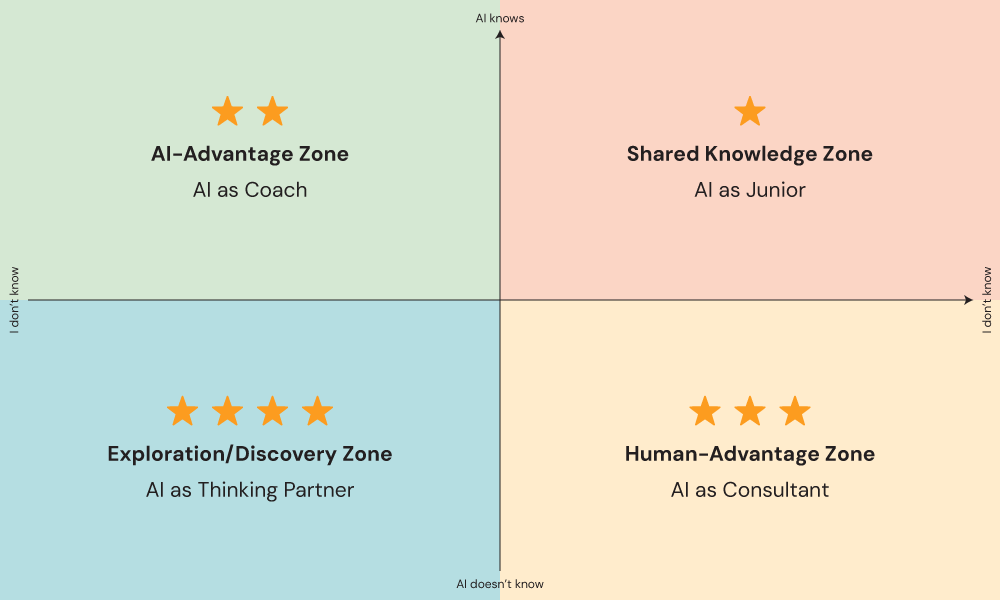
To explore this, I’ve adapted a simple framework inspired by the Johari Window (a tool originally used for self-awareness and communication). Applied here, it maps four different modes of human–AI collaboration, based on who knows what.
Each quadrant represents a different dynamic, and calls for a different approach.
When both you and the AI understand the task, AI becomes a capable assistant, speeding up work you already know how to do. Think: polishing an email, summarising notes, or formatting data. Be clear about what you want, iterate until it's right, and always check the output.
Here, AI knows more than you do. It can explain unfamiliar topics, introduce new ideas, or surface insights you wouldn't have found on your own. Ask good questions and think critically about the answers. AI can be wrong or out of date, so always sense-check what it tells you.
This is the most overlooked, and often most valuable, zone. Neither you nor the AI has the answer, but by thinking out loud together, patterns start to emerge. This is where strategic and creative work lives: forming a point of view, exploring options, developing ideas. Don't come looking for "the answer", come ready to shape one.
You hold knowledge the AI doesn't; internal context, private data, team dynamics. Think of it like briefing a consultant who wasn't in the room. The more relevant context you share, the more useful the output. Just be mindful of what's appropriate to disclose.
In any AI conversation, you'll move between these four zones. Recognising which one you're in helps you adjust your approach and get far more out of the interaction. The shift is simple: ask yourself what role AI is playing right now, and collaborate accordingly.
-- Ka Man Lok
Get in touch and tell us about your project or challenge